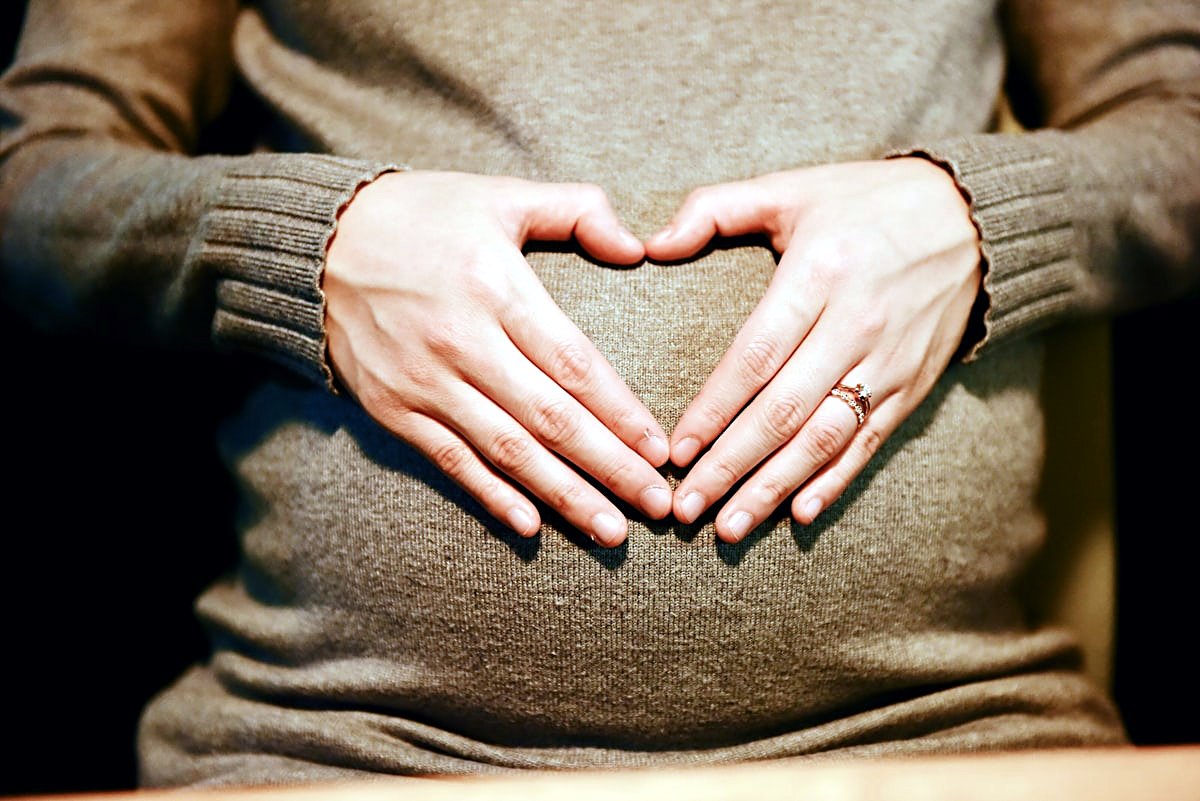
Pregnancy changes your mouth more than most people expect, and the advice floating around about it is a strange mix of outdated and overly cautious. The short version is that dental care during pregnancy is safe, useful, and the thing to skip is the skipping.
Why gums flare up in pregnancy
Gums that bleed when you brush, feel puffy, or look darker red than usual are one of the most common changes in pregnancy. It's often called pregnancy gingivitis, and it turns up in a large proportion of pregnancies, usually appearing from around the second month and peaking somewhere in the third trimester before settling after the birth.
The mechanism is worth understanding, because it explains what to do about it. Raised oestrogen and progesterone change how gum tissue responds to plaque, exaggerating the inflammatory reaction. The plaque isn't necessarily worse than before. Your gums are simply reacting harder to the same amount of it. Which means the bacteria along the gumline still matter enormously, and cleaning them off works just as well as it ever did.
Some women also develop a soft red lump on the gum between two teeth, often called a pregnancy epulis. It looks alarming and it's benign. Most shrink away by themselves after the birth. If one is bleeding constantly or getting in the way of eating, it can be removed, so mention it rather than worrying quietly.
Morning sickness is hard on enamel
Stomach acid is considerably stronger than anything you'd drink, and repeated vomiting bathes the teeth in it. Over weeks or months that softens and dissolves enamel, usually most noticeably on the inner surfaces of the upper front teeth where the acid pools. It can leave teeth looking more yellow, feeling smooth at the edges, and going sensitive to cold.
The instinct after being sick is to brush immediately, and that's the one thing not to do. Enamel is softened for a while afterwards, and brushing at that point scrubs it away. Wait about half an hour.
- 1/Rinse straight away with plain water, or with a fluoride mouthrinse if you have one, and spit rather than swallow.
- 2/A smear of fluoride toothpaste rubbed over the teeth with a finger helps, without the abrasion of a brush.
- 3/Wait roughly 30 minutes before brushing, and use a soft brush with light pressure when you do.
- 4/Sugar-free gum after eating helps saliva neutralise acid faster, and saliva is your main defence here.
- 5/Tell us if sickness has been severe or prolonged. High-fluoride toothpaste and varnish can protect enamel while it's happening.
The myth about losing a tooth per baby
The old saying is that you lose a tooth for every child, because the baby takes calcium from your teeth. That isn't how teeth work. The mineral in adult enamel isn't drawn back out into the bloodstream. Your body sources calcium for the baby from your diet and, if needed, from bone, not from your molars.
What's true is that pregnancy stacks up several genuine risks at once, and left alone they do cost people teeth. Inflamed gums that bleed and get avoided, acid erosion from sickness, more frequent snacking and grazing, reflux, and a stretch of months where dental appointments feel like the least urgent thing on a long list. The pattern is real even though the folk explanation is wrong.
So the practical takeaway is the opposite of fatalism. None of those risks are inevitable, and all of them respond to fairly ordinary care during the nine months.
What treatment is safe, and when
Routine dental care is safe throughout pregnancy. Examinations, cleans, fluoride treatment and fillings can all be done, and the New Zealand Dental Association and health authorities internationally are consistent on this. Local anaesthetic of the type used in dentistry is well established as safe in pregnancy, so there's no need to grit your teeth through a filling without it.
The second trimester is generally the most comfortable window for anything non-urgent. Nausea has usually eased, and lying back for a while is easier than it becomes later on. In the third trimester appointments are kept shorter and you'll be positioned with a slight tilt to your left side, which keeps the weight of the uterus off a major blood vessel and stops that light-headed feeling some women get lying flat.
Urgent treatment is a different calculation and shouldn't wait for a tidier trimester. An infected tooth is a source of infection and significant pain, and both of those are worse for a pregnancy than the treatment is. If we need to prescribe anything, we choose medicines with a well-established record in pregnancy and are happy to coordinate with your midwife or LMC. Tell us you're pregnant, and how far along, when you book.
X-rays in pregnancy
Dental X-rays are among the lowest-dose imaging in medicine. The beam is small, tightly aimed at the jaw, and pointed away from the abdomen, and digital sensors need a fraction of the exposure old film did. A lead apron with a thyroid collar adds further shielding. The dose reaching a baby from a dental X-ray is effectively negligible.
That said, the sensible approach is the one we'd take anyway: no imaging without a reason. Routine screening X-rays can usually wait until after the birth without anything being lost, and we'll often defer them.
Where it flips is diagnosis. If you have a painful or infected tooth, an X-ray is how we find out what's actually happening and treat it properly. Refusing imaging in that situation means guessing, and guessing leads to worse decisions than a low-dose X-ray does. We'll explain why we're recommending one, and the choice stays yours.
Why skipping the dentist is the bigger risk
Untreated dental problems don't pause for nine months. Early decay becomes deep decay, gingivitis becomes established gum disease, and a grumbling tooth becomes an abscess, usually at an inconvenient moment. Everything on that list is harder and more uncomfortable to deal with at 36 weeks than it would have been at 16.
Researchers have also reported associations between severe gum disease and outcomes such as preterm birth and low birth weight. It's worth being straight about the state of that evidence: an association has been observed repeatedly, but studies on whether treating gum disease during pregnancy changes those outcomes have been mixed, and it isn't settled. Healthy gums are worth having regardless, and that's the honest way to put it.
A check-up and a clean during pregnancy is a small, unremarkable thing to organise. Scale and clean starts from $150, an exam with X-rays is $79 for new patients, and we're at the Airport Shopping Centre with free parking right outside, which matters more than usual when you're carrying a bump up a car park stairwell.
After pēpi arrives
The decay-causing bacteria that colonise a baby's mouth mostly arrive from the people closest to them. Sharing spoons, tasting food off the same fork, or cleaning a dropped dummy in your own mouth all pass them along. So looking after your own teeth after the birth is quietly part of looking after theirs, and it's a good reason to get any outstanding treatment finished.
Enrol your baby with the community oral health service on 0800 TALK TEETH, which is 0800 825 583. It's free, enrolment can happen from birth, and the first look should be well before school starts. Start wiping gums and brushing that first tooth as it appears, with a smear of standard fluoride toothpaste, and keep bottles of milk or juice out of the cot.
New parents are also the people most likely to cancel their own appointments for a year or two. Understandable, and it's usually the point where small problems get expensive. Bring the baby with you if that's what makes it possible. We're used to it.
Quick questions
- Can I have a filling while I'm pregnant?
- Yes. Fillings are safe throughout pregnancy, and the second trimester is often the most comfortable time for non-urgent work. If a tooth is painful or infected, it's better treated than left, whatever stage you're at.
- Is the numbing injection safe for the baby?
- The local anaesthetics used in dentistry have a long, well-established safety record in pregnancy. Going without pain relief isn't the safer option, because pain and stress aren't good for you either. Just let us know you're pregnant beforehand.
- Can I whiten my teeth while pregnant?
- We'd suggest waiting until after the birth, and after breastfeeding if that's the plan. Whitening is entirely elective, and there isn't good safety evidence in pregnancy either way, so deferring it is the straightforward call.
- Is a scale and clean safe during pregnancy?
- Yes, and it's one of the more useful things you can do, since gums are more reactive during pregnancy. A scale and clean starts from $150, and you'll get a written quote if anything further is recommended.
Sources: New Zealand Dental Association, patient guidance on oral health in pregnancy · Te Whatu Ora | Health New Zealand, community oral health service and early childhood oral health guidance · Manatū Hauora | NZ Ministry of Health, oral health guidance and New Zealand Oral Health Survey findings. This article is general information, not a substitute for an examination and personal advice from a dentist. If you're in pain or unsure, book a visit or call 022 852 4000.